


Maintenance Guide for Lovol 5‑Ton Wheel Loader | Scientific Maintenance to Extend Equipment Service Life
Maintenance Tips for Lovol 5‑Ton Wheel Loader
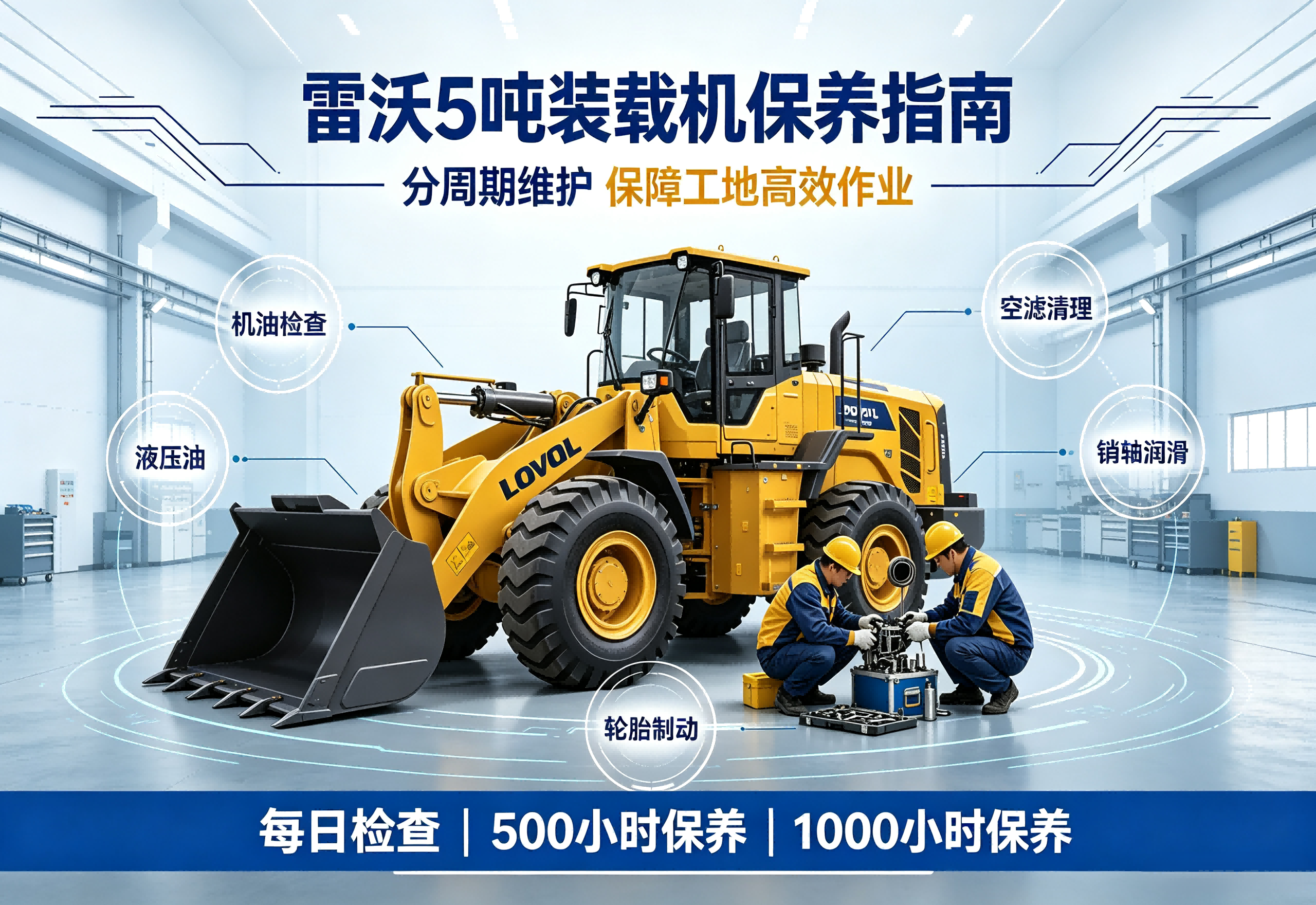
The 5‑ton wheel‑loader is widely used in mines, aggregate yards and infrastructure construction sites. It works under heavy‑load and dusty conditions. Proper maintenance can reduce failures, extend overall service life and cut downtime losses. Below is the maintenance checklist sorted by service intervals: daily check, 50‑hour, 250‑hour, 500‑hour and 1000‑hour, applicable to Lovol 5‑ton models (LG855 series, etc.).
I. Pre‑operation Daily Inspection & Maintenance (Every working day)
Overall machine inspection
Check frames, booms, buckets and hinge pins for cracks or deformation; check whether connecting bolts and hinge pins are loose; inspect bucket teeth, replace them in case of severe wear.
Fluid level inspection
‑ Engine oil: Stop the engine and wait for 5‑10 minutes, confirm oil level sits between upper and lower marks on the dipstick.
‑ Coolant: Check the coolant level in the expansion tank. Never open the radiator cap when the engine is hot. Top up with antifreeze of the same specification if insufficient.
‑ Hydraulic oil: Park the machine on level ground, lower boom and lay bucket flat on ground, read the level gauge of hydraulic oil tank.
‑ Fuel tank: Check fuel level and fill with clean diesel; drain sediment water via the drain valve at tank bottom.
Tire and brake system
Check tire pressure, cuts and bulges on tire tread; fasten wheel rim bolts; inspect brake pedal travel to ensure sensitive braking without deviation.
Electrical system
Tighten battery terminals and remove oxidation; verify lights, reverse alarm and horn work normally.
Grease lubrication points
Apply grease to hinge pins of boom, bucket, rocker arm and frame every day. Stop greasing once old grease squeezes out; avoid over‑greasing.
After startup, keep engine idling for 3‑5 minutes. Check for oil or water leakage and confirm all instrument alarm lights go off.
II. 50‑Hour Maintenance
- Complete all daily inspection items.
- Tighten bolts of front/rear axles and drive shaft.
- Check transmission oil level.
- Clean outer air‑filter element. Blow dust from inside out with compressed air or tap gently. Do not wash air filter.
- Inspect hydraulic hose joints for oil seepage.
III. 250‑Hour Maintenance
- Complete all 50‑hour maintenance items.
- Replace engine oil and oil filter.
- Check transmission oil level and torque converter for leakage.
- Check gear‑oil level of drive axles; top‑up if needed.
- Thoroughly clear dust and debris from radiator, water tank and hydraulic oil radiator to prevent overheating.
- Adjust parking‑brake and service‑brake clearance.
- Check electrolyte level of non‑maintenance‑free batteries.
IV. 500‑Hour Maintenance (Critical Service Interval)
- Perform all 250‑hour maintenance items.
- Replace primary and secondary fuel filters.
- Replace inner air‑filter element.
- Inspect drive‑axle gear oil; replace gear oil directly for harsh working conditions.
- Inspect hydraulic return‑oil filter and replace it if heavily contaminated.
- Check tension of fan belt and alternator belt; replace cracked belts immediately.
- Inspect multi‑way valve and cylinder piston rods for scratch marks and oil leakage.
- Tighten critical bolts on frame, boom, wheel hubs and drive shaft.
V. 1000‑Hour Maintenance
- Execute all 500‑hour maintenance work.
- Replace hydraulic oil, hydraulic return‑oil filter and suction filter.
- Replace transmission‑torque‑converter fluid and corresponding filters.
- Fully replace gear oil for front and rear drive axles.
- Inspect and adjust valve clearance.
- Inspect all rubber hoses; replace aged or bulging hoses in advance to avoid hose burst.
- Check steering system, including steering play and steering cylinder for abnormalities.
- Check wear condition of brake pads.
VI. Special Tips for Severe Working Conditions (Mines, Heavy Dust, High‑Altitude Sites in Bolivia)
For mining, aggregate and high‑altitude scenarios, shorten maintenance intervals to 70% of the original manufacturer’s standard cycles.
- Increase air‑filter inspection frequency; shorten filter replacement cycle in extremely dusty environments.
- Clean radiators daily to avoid overheating.
- Hydraulic oil and engine oil degrade faster under harsh conditions, shorten oil‑change intervals accordingly.
- Ensure sufficient lubrication for all hinge pins; mine dust can cause rapid pin wear.
- For high‑altitude operation, monitor engine water temperature and oil pressure. Stop machine immediately upon alarm alerts for troubleshooting.
VII. Common Prohibited Operations
- Do not mix engine oil, hydraulic oil or gear oil of different grades.
- Do not drain oil while machine is hot; never open radiator cap on hot engine.
- Avoid prolonged idling. Do not shut down engine right after
For high‑altitude, dusty mining working conditions, shorten maintenance cycles to 70% of standard interval. Never mix different oil specifications. Stop machine immediately if abnormal noise or alarm occurs.
Professional Technical Support of Jinjun Global Service Co., Ltd.
As a local service provider deeply engaged in Bolivia’s construction machinery market, Jinjun Global Service Co., Ltd. boasts a mature service system for Lovol‑branded equipment and is well‑acquainted with the special operating conditions of high‑altitude mines and open‑air construction sites across Bolivia. Our team of professional technical engineers strictly complies with original‑manufacturer maintenance specifications. We deliver one‑stop integrated services including regular loader maintenance, fault diagnosis, overhaul repair, genuine spare‑parts supply and operator technical training.
In view of local mining conditions featuring heavy dust, low temperature and low air pressure at high altitudes, drawing on abundant on‑site service experience, Jinjun Global can customize maintenance schedules for each machine according to customers’ actual working intensity, properly adjust maintenance intervals and avoid premature component wear caused by harsh working conditions.
Apart from on‑site emergency repair and on‑station maintenance services, Jinjun Global also provides remote technical consultation. Whenever customers have questions about equipment maintenance or receive fault alarms, they can reach our technicians for timely guidance. Our services help mining enterprises cut unplanned equipment downtime, maximize the operation availability of Lovol wheel loaders and ensure stable progress of engineering projects. Please contact Jinjun Global Service for spare‑parts procurement and maintenance booking to obtain localized technical solutions.
Tags: